“The reason for evaluating is to determine the effectiveness of a training program” (Kirkpatrick).
Overview
Kirkpatrick’s model focuses on the four levels of evaluation.
- Reaction: The reaction level allows time for students to assess their attitudes and reactions toward their experience through anonymous questionnaires.
- Learning: During the learning level, the instructor determines what has been learned by the students and if they will retain it.
- Behavior: The behavior level is where instructors set times in the future to observe if students are using the skills, knowledge, and attitudes they gained from the lesson.
- Results: Finally, during the results stage, the instructor looks to see if the instruction leads to any “final results” such as high scores on a test or state/district assessment.
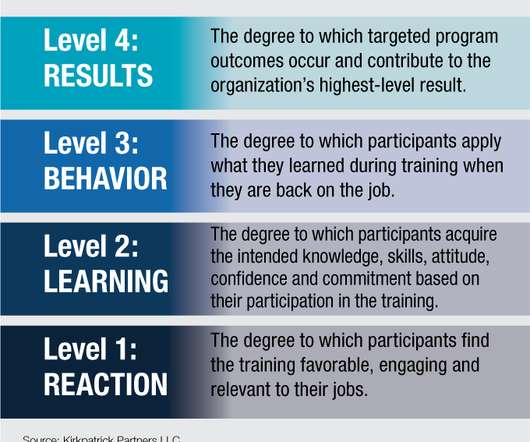
Each level allows time to observe the students and identify the positives and negatives of each step, look at the student’s outcomes, and understand what/why the students did what they did.
Strategies and Tools
Level 1: Reaction
- Interviews
- Online assessments that can be graded by evaluators
- Printed or oral reports provided by evaluators
- Exit slips
- Peer reviews
Level 2: Learning
- Exams, interviews, or assessments prior to and immediately after the training
- Observations by peers and instructors
- A distinct clear scoring process
Level 3: Transfer
- Surveys and close observations
- Asking, “were the learned knowledge and gained skills used?”
- Self-assessment can be handy, but only with an extensively designed set of guidelines
Level 4: Results
- Use a control group
- Allow enough time to measure/evaluate
- No final results can be found unless a positive change takes place

About Me

 Lauren's Blog